
The Plug That Changed How We Use Electricity
An Everyday Invention
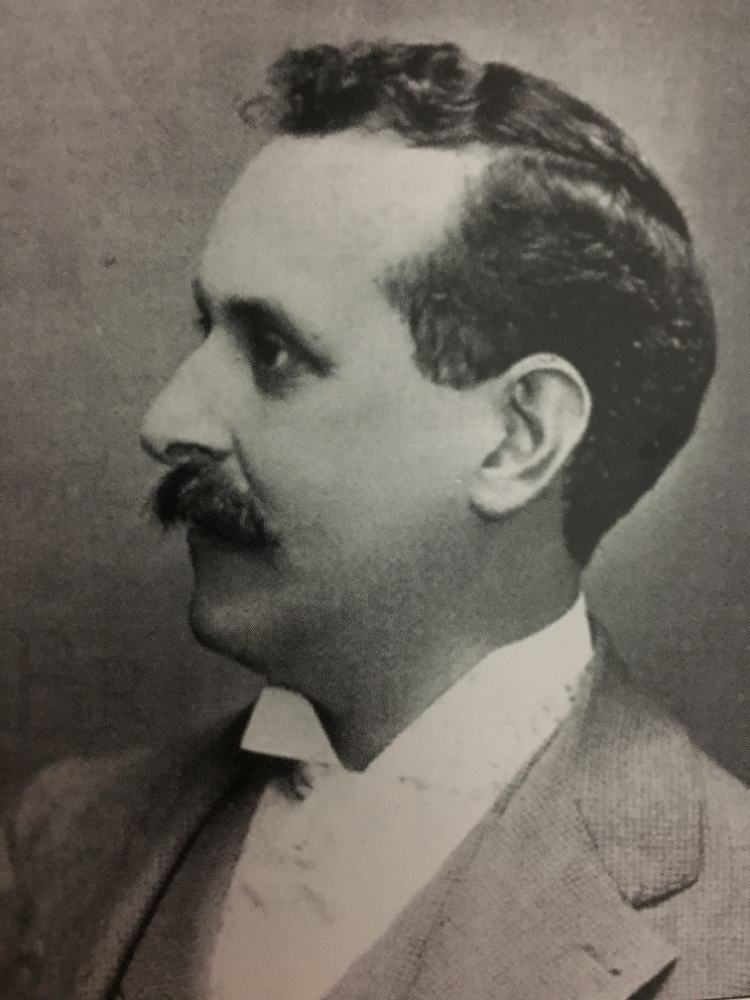
Think about the last time you unplugged a lamp, a toaster, or a phone charger. It’s such an ordinary act that most of us never stop to wonder who came up with the idea. On November 8, 1904, a Bridgeport inventor named Harvey Hubbell II received a U.S. patent for a “separable attachment plug.” The idea of connecting and disconnecting electrical devices would go on to change how Americans used electricity in their homes.
A Problem Hiding in Plain Sight
When electric light arrived in homes, the first outlets were the light sockets themselves. Early electrical customers screwed a bulb into a socket and that was that. But as appliances like electric fans and desk lamps became more common, people began connecting them to the house supply through lamp-holder plugs. Those arrangements could be unstable and dangerous. A device might work loose, or a poor connection might overheat.
Other countries were already working on the problem. In Britain, two-pin plugs and wall sockets were appearing on the market as early as 1885. In the United States, there was no standard at all. Many early appliances had to be hard-wired, or came with a variety of plug shapes that only fit one manufacturer’s receptacle.
Harvey Hubbell’s Path to Bridgeport
Hubbell had been working in manufacturing before he struck out on his own. In 1888, at age 31, he left his job as a manager at a manufacturing company and founded his own business in Bridgeport, Connecticut. He began by making consumer electrical products, and because his factory needed them, he also invented manufacturing equipment to run it.
Over his career he received at least 45 patents, most of them for electrical products. His pull-chain light socket, patented in 1896, was another successful invention. It was an early and widely used switch that people could operate without any special knowledge, and it remains a familiar design today.
The 1904 Patent
Patent No. 774,250, granted on November 8, 1904, described a plug that could be attached to and removed from a device. It was part of a series of inventions that built on Hubbell’s earlier switch work and his pull-chain socket. Hubbell’s design let people connect appliances to the supply with a simple, reversible action. That was a meaningful change for people who had been relying on makeshift connections.
Separable plugs were not entirely new, and other inventors were working on similar ideas at the time. But Hubbell’s designs were widely adopted, and his company treated the plug as a product line in its own right. A 1906 Hubbell catalog listed a range of attachment plugs, floor receptacles, and related fittings, showing how quickly the idea was turning into a business.
From Tandem Blades to Parallel Blades
The first Hubbell plugs had two flat blades placed one behind the other. That arrangement worked, but Hubbell’s engineers found a better way. Around 1910 to 1912, the company introduced a parallel flat-blade configuration, which was less expensive to manufacture and made the design easier to produce at scale. That change helped set the shape that many American plugs still follow.
Adding Safety: The Ground Pin
Safety was the next concern. Electrical equipment with metal cases could become dangerous if a fault let current reach the outside, and a grounding connection was one way to protect users. In 1915, George P. Knapp, an engineer working at Hubbell in Bridgeport, designed a separable plug with an extra flat blade for connecting equipment to ground. Hubbell also received patents in 1916 for a polarized plug and a duplex version that could serve two devices at once.
Several inventors and companies have been credited with the development of the grounded plug, and the history is not simple. Still, the grounded design Hubbell’s engineers worked on helped shape the plugs most of us use at home today.
Building a Business
By the time the 1916 patents were granted, Hubbell’s company had reportedly sold more than 15 million separable plugs. When the National Electrical Manufacturers Association formed in 1926, it adopted Hubbell’s parallel-blade design as the general service plug standard for the United States. Because of that choice, a Bridgeport company’s design became a national norm.
The company Hubbell founded was incorporated in 1905 and became Hubbell Incorporated. Today it is headquartered in Shelton, Connecticut, and it still makes electrical products. After Hubbell died on December 17, 1927, leadership passed to his son, Harvey Hubbell III, who had already spent years working in the business.
Why It Still Matters
Modern homes are full of plugs, and most of us never think about them. Each one reflects decisions made by engineers more than a century ago, when electricity was new and nobody knew what a standard should look like. The shift from makeshift lamp-socket connections to a dedicated, detachable plug is part of why we can move appliances from room to room, charge our devices, and trust that a connection is safe.
Hubbell’s story is a good example of what Connecticut manufacturing has long offered. A small business started in Bridgeport in 1888 produced an invention that changed daily life across the country, and its engineers kept improving the design as safety standards evolved. The company is still based in the state more than a century later.
Next time you plug something in, you can thank a Connecticut inventor and the factory that made the idea practical.